
Divinity suffered in the flesh vs God suffered in the flesh
1. The Core Doctrine: One Person, Two Natures
The Orthodox Church teaches that Jesus Christ is one Person (Hypostasis) with two natures:
- Divine nature – eternal, impassible, uncreated
- Human nature – created, capable of suffering and death
This doctrine was defined at the Council of Chalcedon, which proclaimed that Christ exists:
“in two natures, without confusion, without change, without division, without separation.”
Because of this hypostatic union, what belongs to either nature can be attributed to the one Person of Christ.
So we say:
- “God suffered in the flesh.”✅
- But not “the divine nature suffered.” ❌
2. Why the Divine Nature Cannot Suffer
In Orthodox theology, God is impassible.
The Greek word used by the Fathers is:
ἀπαθής (apathēs)
meaning without passions, incapable of suffering or being altered.
John of Damascus explains:
“The divinity is impassible; yet we say that God suffered in the flesh.”
— Exact Exposition of the Orthodox Faith, Book III, Chapter 20
The divine nature cannot:
- suffer
- change
- decay
- die
If it could, it would not be divine.
3. What Actually Happened on the Cross
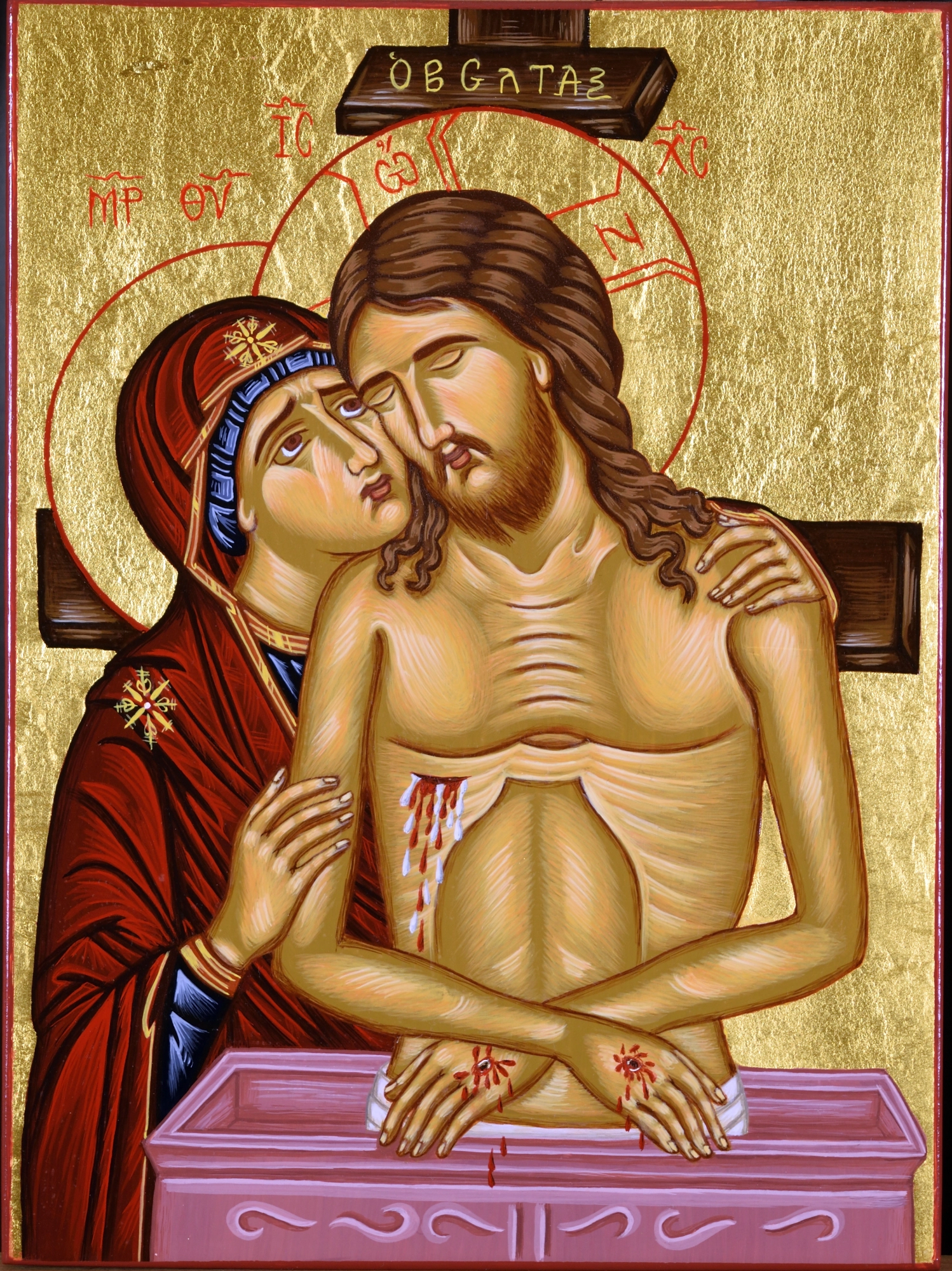
Christ truly suffered because His human nature suffered.
The human nature He assumed from the Virgin Mary could:
- feel pain
- bleed
- hunger
- die
But the suffering belonged to the human nature, while the Person experiencing it was the divine Son.
This is why Scripture can say:
“They crucified the Lord of Glory.”
— 1 Corinthians 2:8
The Lord of Glory (God) was crucified —
but in His humanity.
4. The Examples of St. John of Damascus
To help us approach this mystery, St. John offers two images.
The Sun and the Tree
Imagine:
- A tree being cut
- Sunlight shining on it
The tree is damaged, but the sunlight remains unaffected.
Likewise:
- Christ’s body suffers
- The divinity remains impassible
Yet they remain united.
Heated Iron
Another patristic analogy is iron placed in fire.
The iron becomes:
- glowing
- burning
Yet iron and fire remain distinct.
When water is poured:
- the fire is extinguished
- the iron remains
Similarly in Christ:
- the human nature suffers
- the divinity remains untouched
- yet they are inseparably united
5. The Mystery of Kenosis
This also reveals Christ’s self-emptying.
The Greek word used by St. Paul is:
κένωσις (kenōsis) — self-emptying
“He emptied Himself, taking the form of a servant.”
— Philippians 2:7
Christ did not stop being God.
Rather, He humbled Himself by willingly experiencing human suffering.
Athanasius of Alexandria writes:
“The Word was not Himself subject to corruption, yet He assumed a body capable of death.”
— On the Incarnation, §20
6. How the Church Sings This Mystery
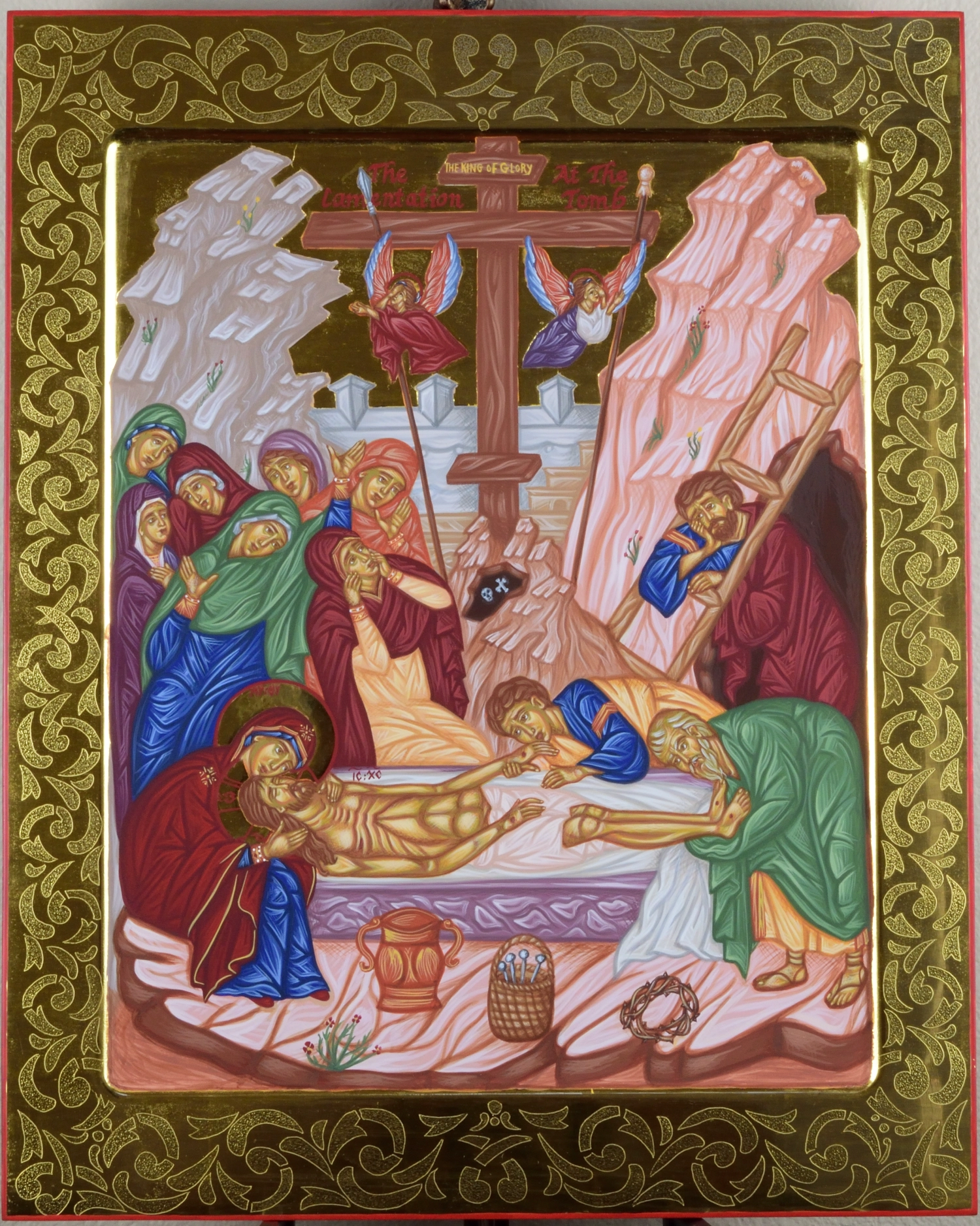
The Church expresses this theology beautifully in the hymns of Holy Saturday.
During the services of Holy Saturday, we hear:
“Though Thy body suffered, Thy divinity remained impassible.”
Orthodox theology is not merely academic —
it is sung in the Church’s worship.
7. A Spiritual Lesson
The Cross also teaches us something about our own suffering.
The saints often say:
When iron enters fire, it becomes fire-like.
So when a human person unites with Christ, suffering itself becomes transformed.
Maximus the Confessor writes:
“God became man so that man might become god by grace.”
— Ambigua, 7
Through union with Christ:
- suffering can become purification
- weakness can become strength
- death becomes resurrection
8. A Simple Analogy from the Saints
An elder once told a monk who feared suffering:
“When a surgeon cuts the body, it hurts—but the cut heals the disease.”
The Cross is God’s healing incision into human death.
Christ allowed His human body to be wounded
so that human nature itself might be healed.
✅ In summary
- Christ has two natures (divine and human)
- He is one Person (the Word/Logos)
- The human nature suffered
- The divine nature remained impassible
- Yet the Person of Christ truly suffered in the flesh
Therefore the Church rightly proclaims:
“God suffered in the flesh.”