
The Mystery of the “Great and Holy Sabbath”
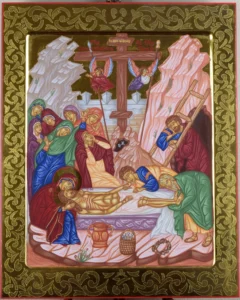
In the Orthodox Church, Holy Saturday is called the “Great and Holy Sabbath.” It is not simply the day between the Cross and the Resurrection. The Fathers say it is the most mysterious and victorious Sabbath in history, because on this day Christ rests in the tomb while conquering death itself.
- The Fulfillment of the First Sabbath
The first Sabbath appears in Genesis when God rests after creation.
The Greek word used in Scripture is:
σαββατισμός (sabbatismos) — a sacred rest.
On Holy Saturday, the Fathers say a new and greater Sabbath occurs.
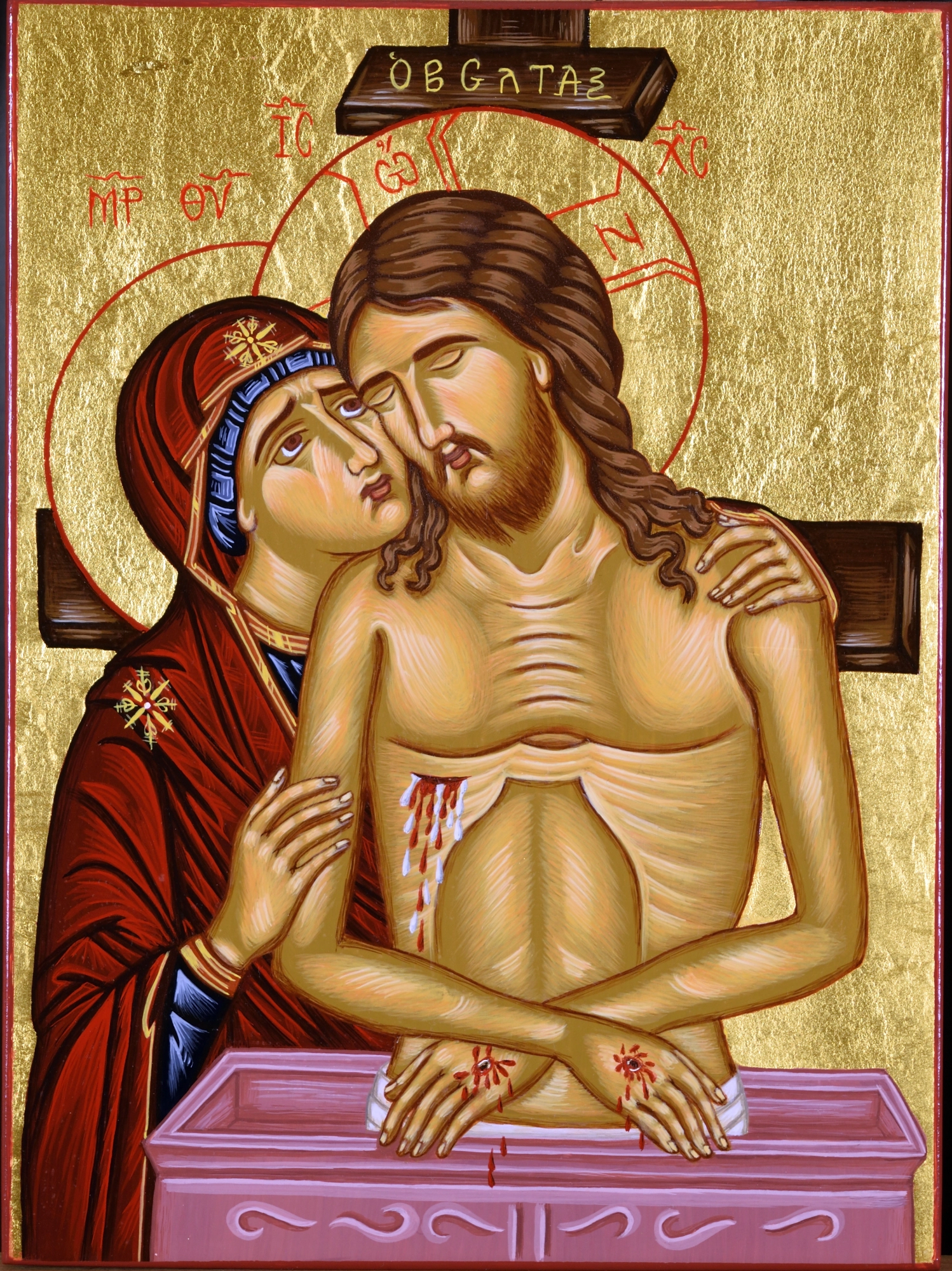
Christ, the Creator, rests in the tomb after completing the work of redemption.
Epiphanius of Salamis preached in an ancient homily read in the Church on Holy Saturday:
“Today a great silence reigns on earth, a great silence and stillness… the King sleeps.”
— Ancient Homily on Holy Saturday
Creation itself becomes silent because God has entered death.
- What Christ Was Doing in the Tomb
Externally, Christ’s body lay in the tomb. But the Fathers insist that His divine activity never ceased.
While His body rested:
- His human soul descended into Hades
- His divinity filled all things
John of Damascus explains:
“Though His soul was separated from His body, the divinity remained united to both.”
— Exact Exposition of the Orthodox Faith, Book III, 27
Thus Christ was simultaneously:
- in the tomb with the body
- in Hades with the soul
- and everywhere as God.
- The Harrowing of Hades
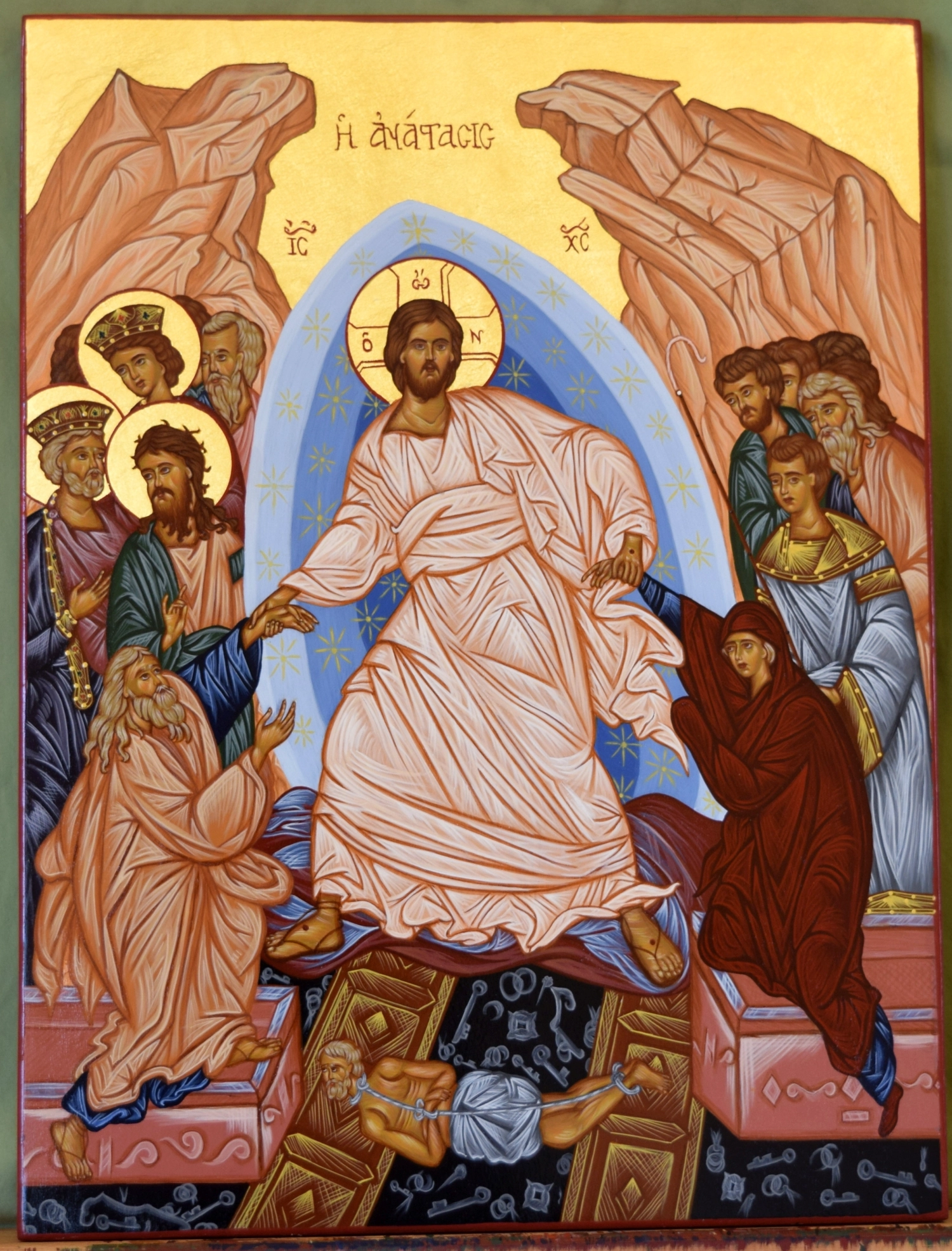
The central event of Holy Saturday is called the Harrowing of Hades.
The icon of the Resurrection in Orthodoxy does not usually show Christ leaving the tomb. Instead it shows Him descending into Hades and raising Adam and Eve.
This reveals the cosmic meaning of salvation.
Christ destroys the prison of death and liberates the righteous who had died before His coming.
John Chrysostom proclaims in the famous Paschal homily:
“Hell was embittered when it encountered Thee below…
It took a body and discovered God.”
— Paschal Homily
Death thought it swallowed a man—but it encountered God Himself.
- Why the Day Is Called the “Blessed Sabbath”
Holy Saturday is the true Sabbath rest of Christ.
After six days of creation God rested.
After the work of redemption on the Cross, Christ rests again.
But this rest is not inactivity—it is the silent victory over death.
Maximus the Confessor writes:
“The Sabbath of Christ’s burial reveals the mystery of the new creation.”
— Ambigua, 42
The tomb becomes the womb of the new creation.
- A Story from the Fathers
A monk once asked an elder:
“Why did Christ descend into Hades?”
The elder answered with a simple image:
“If a shepherd loses one sheep in a deep pit, he does not stand above calling to it. He climbs down to bring it out.”
This reflects the teaching of Gregory of Nyssa, who described Christ’s descent as God entering the darkness of death to rescue humanity.
God did not merely command salvation from heaven—
He entered the deepest place of human despair.
- The Paradox of Holy Saturday
Holy Saturday holds several paradoxes at once:
- Christ is dead, yet He destroys death
- Christ rests, yet He liberates the captives
- Christ lies in a tomb, yet He fills the universe
The liturgy captures this mystery with a striking hymn:
“Let all mortal flesh keep silence…
for the King of kings and Lord of lords comes to be slain,
and to give Himself as food to the faithful.”
Even in death, Christ prepares the Eucharistic life of the Church.
- The Spiritual Meaning for Us
Holy Saturday reveals that God works even in silence and darkness.
Sometimes in our lives we experience something similar:
- prayers seem unanswered
- hope seems buried
- God appears silent
But Holy Saturday teaches that God is often doing His greatest work in hiddenness.
Just as the disciples thought everything was finished, Christ was breaking the gates of Hades.
☦️ In Orthodox theology:
- Good Friday reveals God’s love
- Holy Saturday reveals God’s hidden victory
- Pascha reveals God’s triumph over death
As the Church sings at Pascha:
“Christ is risen from the dead,
trampling down death by death,
and upon those in the tombs bestowing life.”