
God suffered in the flesh - Christology Debate
To understand why the phrase “God suffered in the flesh” became so important, we must look at the great Christological debates of the early Church. These debates were not mere intellectual arguments—they concerned the very identity of Christ and the reality of our salvation.
- The Nestorian Controversy
The first major debate arose with Nestorius in the early 5th century.
Nestorius feared that calling Mary Theotokos (God-bearer) might imply that the divine nature itself was born or suffered. Because of this, he proposed that Christ was almost like two persons loosely united:
- the man Jesus
- the divine Word
In this view, it would be incorrect to say “God suffered”, because Nestorius believed the suffering belonged only to the human person.
But the Church recognized that this divided Christ.
The Orthodox Response
Cyril of Alexandria defended the unity of Christ. He insisted that:
“The Word of God suffered in the flesh.”
— Third Letter to Nestorius
He did not mean the divine nature suffered, but that the Person who is God truly experienced suffering through the humanity He assumed.
This was affirmed at the Council of Ephesus.
The council proclaimed:
- Mary is Theotokos
- Christ is one Person
- therefore God the Word truly became man
- The Opposite Error: Monophysitism
After Nestorianism was rejected, another extreme appeared.
Some followers of Eutyches taught that after the incarnation Christ had only one nature.
This view is called Monophysitism (one nature).
In this theory:
- Christ’s humanity is absorbed into divinity
- the distinction between the natures disappears
If this were true, it could lead to saying the divine nature itself suffered.
But that would contradict the teaching that God is impassible.
- The Solution: Chalcedon
The Church resolved this tension at the Council of Chalcedon.
Its famous definition says Christ is:
“One and the same Son… acknowledged in two natures without confusion, without change, without division, without separation.”
This protects both truths:
1️⃣ Christ is one Person
2️⃣ Christ has two distinct natures
Thus:
- the human nature suffers
- the divine nature remains impassible
- yet the one Person of the Word experiences the suffering
- The Theopaschite Formula
Later the Church summarized the Orthodox position in a famous phrase called the Theopaschite formula:
“One of the Holy Trinity suffered in the flesh.”
This was affirmed at the Second Council of Constantinople.
The formula safeguards three truths simultaneously:
- The one who suffered is truly God
- The suffering occurred in the flesh
- The divine nature itself did not suffer
- Why This Matters for Salvation
The Fathers insisted on this teaching because our salvation depends on it.
Gregory of Nazianzus famously wrote:
“What is not assumed is not healed.”
— Epistle 101
If Christ did not truly assume human nature:
- humanity would not be healed.
But if Christ were merely a human person suffering:
- then God would not truly enter our suffering.
Orthodoxy proclaims the mystery:
God Himself entered our suffering through the humanity He assumed.
- A Story from the Life of a Saint
A beautiful illustration appears in the life of Isaac the Syrian.
He wrote that when a mother sees her child suffering, she suffers with the child out of love, even though she does not experience the same wound physically.
Likewise, Christ did not remain distant from human pain. Instead:
- He entered it fully
- He shared our death
- He transformed it from within
St. Isaac says:
“Love could not bear to see mankind tormented by death.”
— Ascetical Homilies, Homily 81
So God came personally to defeat death.
- The Mystery Proclaimed in the Liturgy
The Orthodox Church proclaims this paradox constantly in worship, especially during Holy Week.
For example, during Great and Holy Friday, the Church sings:
“Today He who hung the earth upon the waters is hung upon the Tree.”
This hymn expresses the mystery:
- The Creator of the universe
- is the one crucified in the flesh.
✅ In simple words
Orthodoxy teaches:
- Christ is one Person
- with two natures
- the human nature suffers
- the divine nature remains impassible
- yet God the Word truly suffers in the flesh for our salvation
This is why the Church boldly proclaims:
☦️ “One of the Holy Trinity suffered in the flesh.”
The theology of the Incarnation and the Passion is not taught in the Orthodox Church only through councils and theological writings. It is also sung and experienced in the services of Holy Week. The hymnography itself becomes a living confession of the faith defined by the Fathers.
During Holy Week, especially from Holy Thursday to Holy Saturday, the Church repeatedly proclaims the mystery that the one who suffers is God Himself—but He suffers in the flesh.
- “Today He Who Hung the Earth Upon the Waters…”
One of the most famous hymns of Great and Holy Friday says:
“Today He who hung the earth upon the waters is hung upon the Tree.
The King of the angels is arrayed in a crown of thorns.”
This hymn expresses a profound paradox.
The One who:
- created the world
- sustains the universe
is the same Person who is crucified.
Yet the hymn never says the divine nature suffers. Instead it proclaims the mystery that the Creator Himself endures the Cross through the humanity He assumed.
This is the theology defended by Cyril of Alexandria when he wrote:
“The Word of God suffered in the flesh.”
— Third Letter to Nestorius
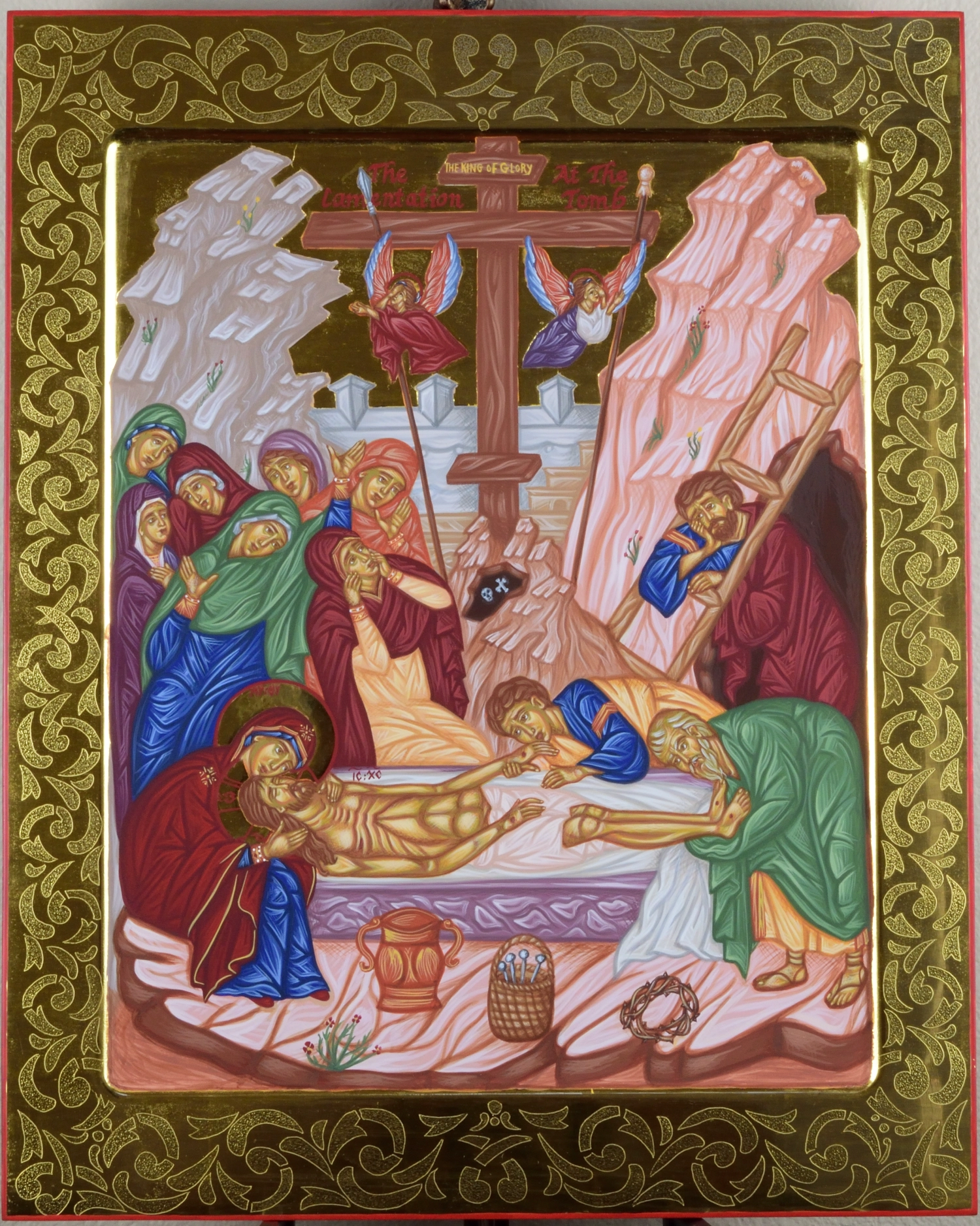
- The Lamentations at the Tomb
During the service of Holy Saturday, the Church sings the Lamentations (Engomia) around the tomb of Christ.
One hymn says:
“Life lay in the tomb, and a strange mystery is seen:
the immortal One is laid in a grave.”
This hymn again teaches the Chalcedonian balance.
Christ is:
- Immortal as God
- Dead in His humanity
The Fathers explain that death touched His human body, but His divinity remained life-giving and incorruptible.
John of Damascus writes:
“Though the body of Christ was separated from the soul in death, the divinity remained united to both.”
— Exact Exposition of the Orthodox Faith, Book III, Chapter 27
Thus even in death the hypostatic union remained unbroken.
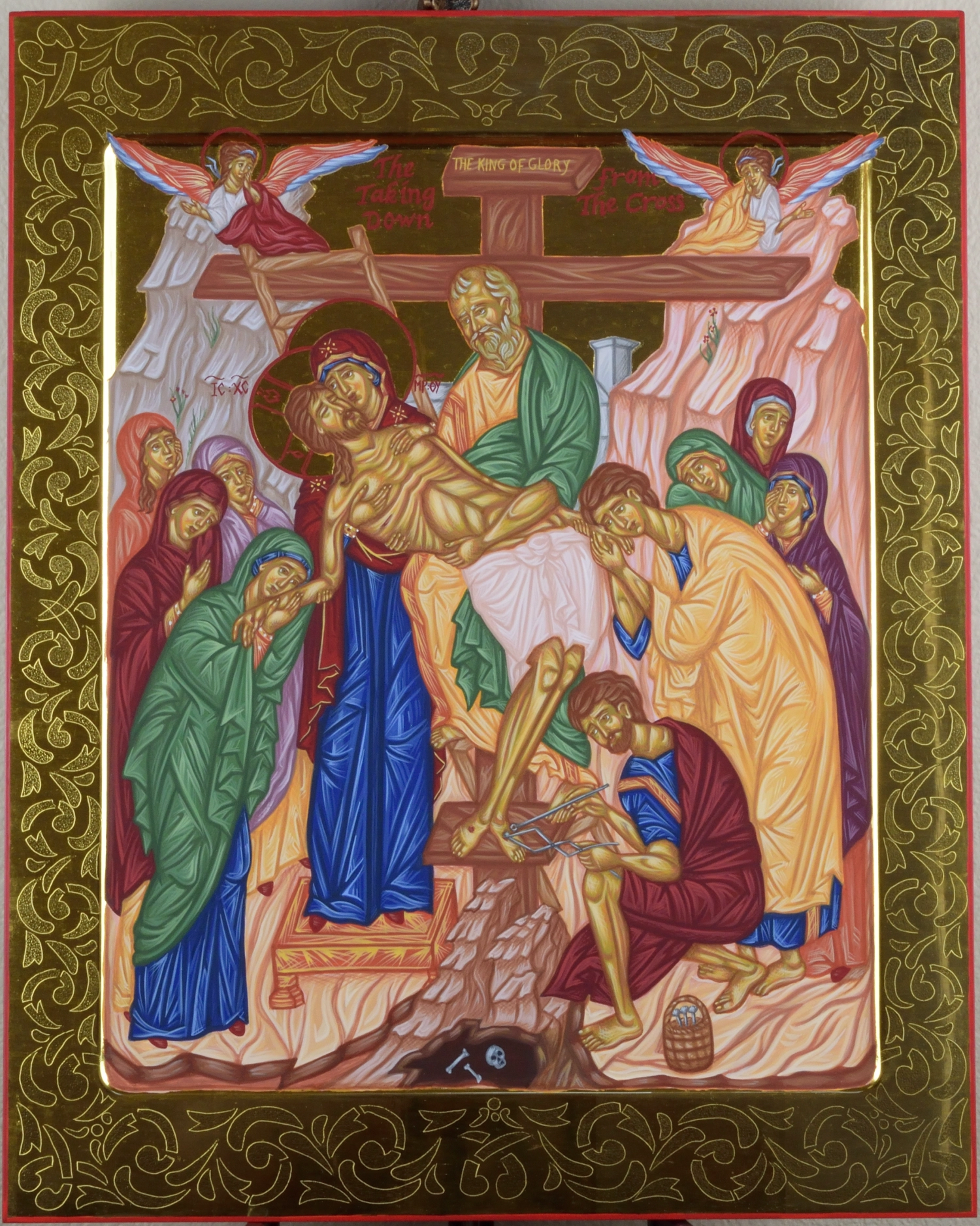
- “Noble Joseph…”
Another famous hymn of Holy Saturday begins:
“The noble Joseph, when he had taken down Thy most pure Body from the Tree, wrapped it in fine linen and spices…”
Here again the Church speaks with precision.
The hymn says “Thy Body.”
This reflects the Orthodox teaching that the body in the tomb is the body of God the Word, because it belongs to the one Person of Christ.
Yet the divinity itself does not die.
- The Silence of Holy Saturday
Holy Saturday is one of the most profound moments in Orthodox theology.
The Church sings:
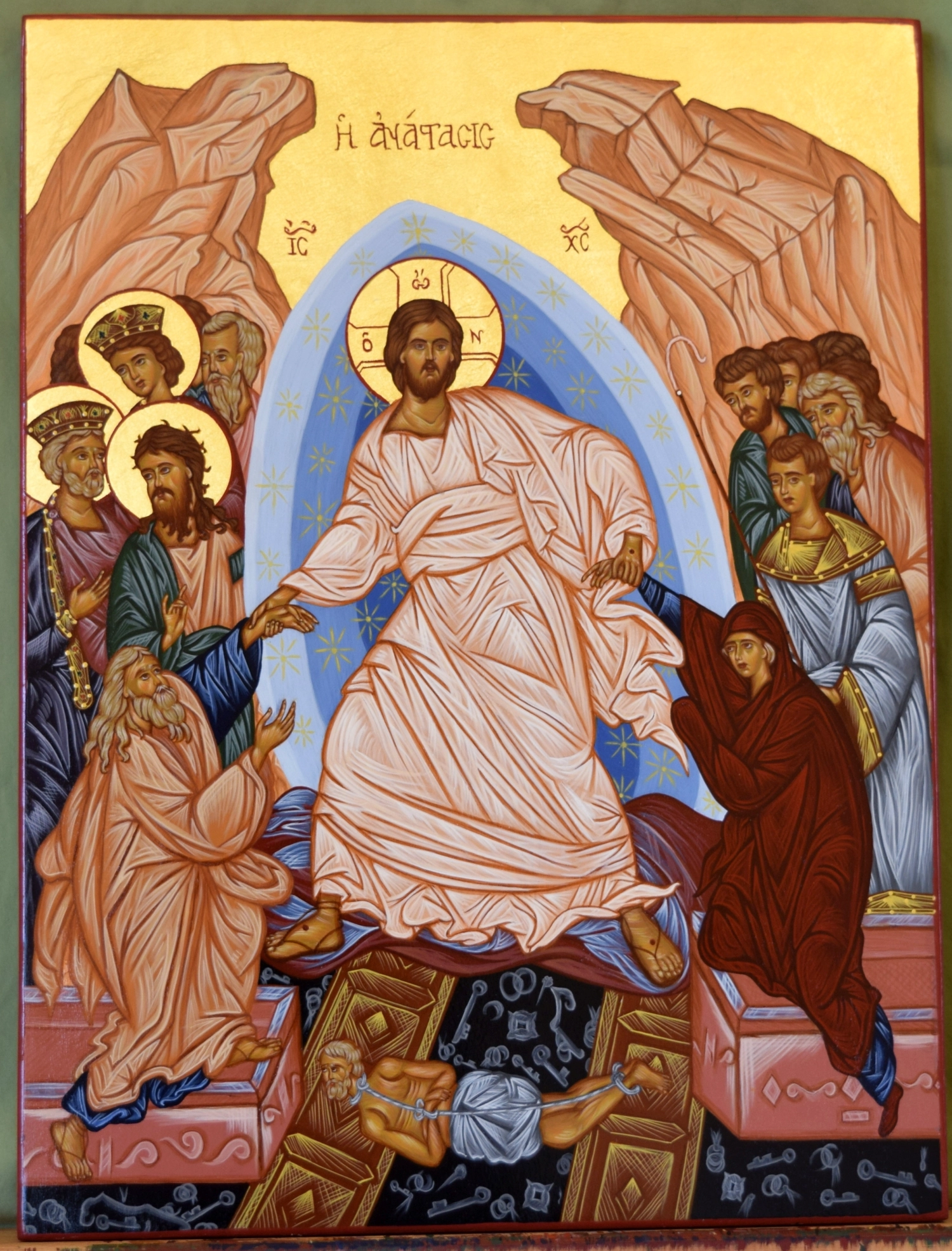
“Today Hades groans and cries aloud:
My power has been destroyed.”
Christ’s human soul descends into Hades, while His body lies in the tomb.
But His divinity fills all things.
Athanasius of Alexandria explains:
“Even while His body lay in the tomb, the Word was governing the universe.”
— On the Incarnation, §17
Thus Christ simultaneously:
- lies in the tomb
- descends into Hades
- and fills heaven and earth.
- A Story from the Desert Fathers
There is a story about a monk who once asked an elder:
“Father, how can the Lord be both dead and yet the giver of life?”
The elder replied:
“Place iron in the fire and it becomes glowing. Strike the iron and it feels the blow, but the fire itself is not harmed.”
The story echoes the teaching of the Fathers such as Maximus the Confessor, who explained that Christ’s humanity suffered while united to the impassible divinity.
This analogy helps us approach the mystery, though the mystery itself remains beyond full human understanding.
- Why the Church Teaches Theology Through Hymns
The Orthodox Church intentionally teaches doctrine through worship.
As the ancient principle says:
Lex orandi, lex credendi — “The rule of prayer is the rule of faith.”
The hymns of Holy Week therefore preserve the theology proclaimed by the Ecumenical Councils:
- Council of Ephesus
- Council of Chalcedon
Through the services, believers learn that:
- Christ is one Person
- with two natures
- who suffers in the flesh
- while remaining true God.
- The Spiritual Meaning for Us
Holy Week ultimately reveals something about God’s love.
God did not save humanity from a distance.
Instead:
- He entered suffering
- He embraced death
- He shattered it from within.
Isaac the Syrian writes:
“Love could not bear to see mankind tormented by death.”
— Ascetical Homilies, Homily 81
Therefore Christ endured the Cross so that humanity might receive life and resurrection.
☦️ In the end, the hymn of Holy Week summarizes everything:
“We worship Thy Passion, O Christ.
Show us also Thy glorious Resurrection.”
The Cross is never the end—it is the doorway to Pascha.